Introduction
What is Nebari?
Nebari is an open-source ecosystem for AI and data science platforms. It's similar to HuggingFace Hub, but for infrastructure: teams browse and install capabilities (document analysis, image generation, chat assistants, code review, and more) onto a platform they control.
Teams pick only the components they need, keeping their stack lightweight, cost-effective, and simple to maintain.
Why choose Nebari?
Building a modern AI or data science platform typically comes down to two approaches:
- Build it yourself: assemble Kubernetes, auth, storage, observability, and more, then maintain it over time. It takes months, and every team re-solves the same integration problems.
- Use a ready-made platform: faster to start, but you are tied to its choices and customization is not easy.
Nebari combines both: ready-made building blocks to design your platform, with the freedom to create and customize your own.
Key features
- Composable: install only the capabilities your team needs; add more over time.
- Open ecosystem: no single vendor controls what you can install. Choose packs from OpenTeams, your own team, or the open-source community.
- Built-in foundations: every pack is automatically secured, connected, and made accessible through the platform UI. No wiring required.
- Runs on your infrastructure: Kubernetes today; cloud-native, bare metal, and edge are on the roadmap.
- Open source: every piece, from infrastructure to packs, is open for inspection, modification, and contribution.
How Nebari works
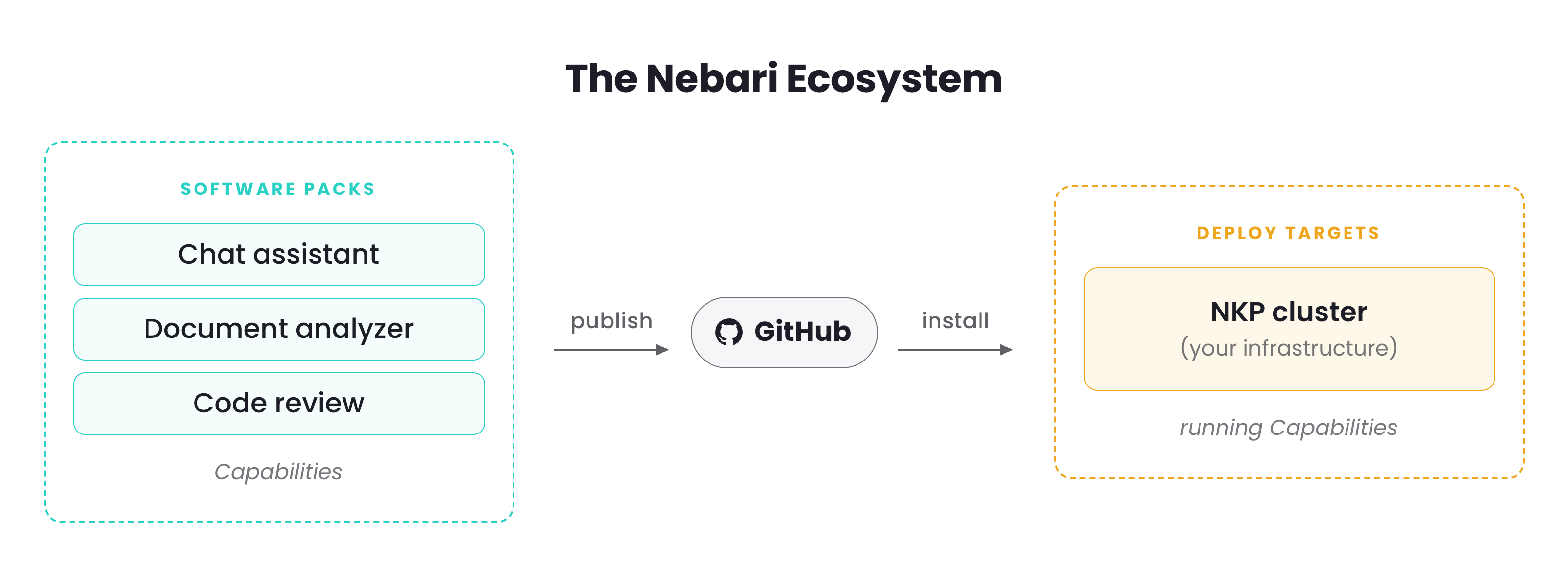
Nebari has two parts that work together:
- Software Packs package Capabilities and publish them on GitHub.
- Deploy Targets install those packs onto your infrastructure and run them.
Software Packs
A Software Pack is an installable artifact published to a GitHub repository. Each pack is self-contained, so teams can browse what's available and install only the ones they need. Packs come from two channels:
- Official packs by OpenTeams: enterprise-grade and curated, published under the
nebari-devGitHub organization. - Community packs by open-source contributors: published on GitHub by individual maintainers or by businesses building on Nebari.
Capabilities
A Capability is something a team can do with the platform once a Software Pack is installed, like analyzing documents or running a chat assistant. The same Capability can be delivered by different packs. Current examples include:
- Document analysis
- Code review
- Image generation
- Data extraction
- Chat assistants
- Report builders
Deploy Targets
A Deploy Target is the infrastructure that hosts your platform.
Today, Nebari runs on Kubernetes via Nebari Kubernetes Platform (NKP), the first platform in the Nebari ecosystem. NKP provides the Kubernetes cluster along with the core services that Software Packs build on.
Additional targets are planned:
- Cloud-native
- Bare metal
- Edge
Next steps
📄️ Get Started with NKP
Install the platform and run your first cluster.
📄️ Browse Software Packs
See the current catalog of Capabilities.
📄️ Build a Pack
Author your own Capability using the pack template.